Whole-Life Wellness: Why Emotional Health Belongs in the Conversation
When we think about health, most of us picture physical well-being — exercise, nutrition, sleep. Others think first of relationships or spiritual life. But true wellness isn't built in separate compartments. It's interconnected, layered, and deeply shaped by how we feel, think, and process life.1
That's the heart of whole-life wellness.
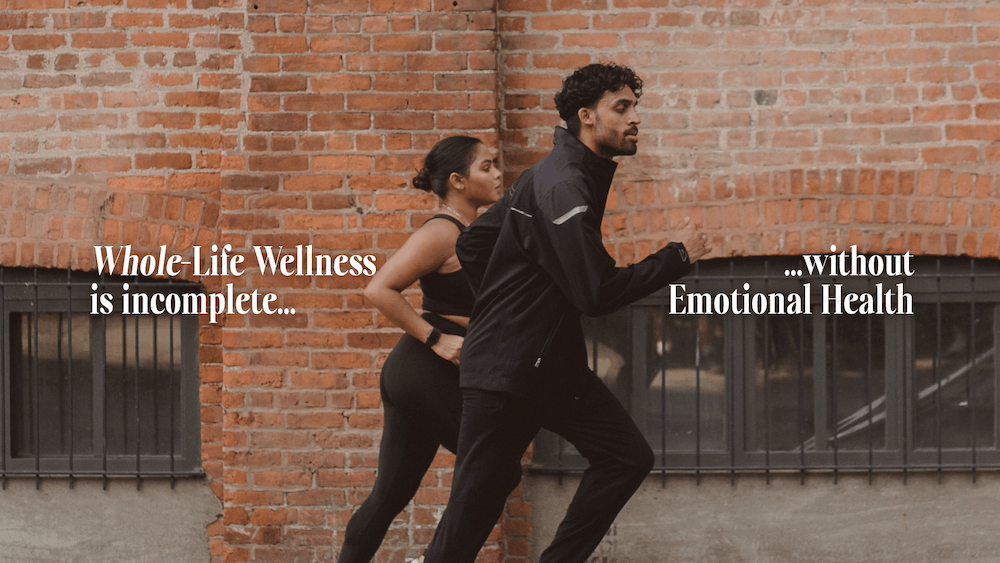
What “Whole-Life Wellness” Actually Means
Whole-life wellness is the understanding that your mental, emotional, physical, relational, and spiritual health aren't separate tracks—they're one integrated system.2 Stress shows up in your body. Relational strain affects your mood. Spiritual questions influence your sense of purpose. When one area is neglected, the others feel the impact.
Counseling plays a vital role in this ecosystem—not as a last resort, but as an active, supportive space where people can understand themselves better and move toward greater balance.
Why Emotional Health Is Often Addressed Last
Even though emotional health touches every part of life, it's often the last thing we tend to. There are a few reasons for this: it's less visible than physical health, many of us are used to "pushing through," there can still be stigma or uncertainty around counseling,3 and it's easy to assume things aren't "serious enough" to address.4
But waiting until something becomes overwhelming doesn't have to be the norm. Just as regular physical checkups help prevent bigger problems, tending to your emotional health early builds resilience, clarity, and steadiness.
How Counseling Supports Everyday Life
Counseling isn’t just about working through major crises—it supports the rhythms and challenges of everyday life.5
Stress Regulation
Life moves quickly, and stress can build quietly. Counseling helps you recognize patterns, understand your nervous system, and develop practical ways to respond rather than react.
Relationships
Whether it’s family, friendships, or partnerships, relationships shape our daily experience. Counseling offers tools for communication, boundaries, and deeper connection.
Parenting and Life Transitions
From raising children to navigating career changes or new seasons of life, transitions can feel disorienting. Having a space to process these shifts can bring clarity and confidence.
Spiritual Well-Being
For many, emotional and spiritual lives are closely connected. Counseling can create room to explore questions, values, and personal growth in a grounded, supportive way.
How Stress Impacts Your Health (More Than You Might Realize)
Stress is often treated as a normal, unavoidable part of life — and in many ways it is. But when stress becomes constant or unmanaged, it doesn't stay in your thoughts. It moves through your entire system: physical, emotional, relational, and even spiritual.
In Your Body
Stress activates your nervous system, preparing you to respond quickly to challenges. An entire field of study—psychoneuroimmunology—explores how mental and emotional health influence physical health.6 In short bursts, stress is helpful. But when it lingers, your body stays in a heightened state, which can lead to tension headaches and muscle tightness, disrupted sleep or constant fatigue, weight gain, digestive issues, a weakened immune response,7 and an increased risk of chronic conditions such as heart disease and diabetes.8 Over time, your body begins to carry what your mind hasn't had space to process.
In Your Emotions
Ongoing stress narrows your emotional bandwidth.9 You may find yourself irritated more easily, overwhelmed by small things, struggling to focus or make decisions, or experiencing anxiety and low mood. What once felt manageable starts to feel heavy — not because you've changed, but because your system is overloaded.
In Your Relationships
Stress rarely stays contained. It spills into how we treat the people closest to us.10 You might notice shorter patience with loved ones, more miscommunication or withdrawal, difficulty being present, increased conflict, and reduced interest in intimacy. Left unaddressed, stress can quietly reshape the tone of your relationships.
In Your Sense of Meaning and Direction
Stress can also cloud how you see your life as a whole, making it harder to feel grounded, purposeful, or connected to what matters most.11 Things that once felt meaningful can begin to feel distant or dulled — not because they've lost value, but because stress is taking up so much space.
Where Counseling Fits In
Counseling offers a place to slow down and notice what stress is doing beneath the surface. It helps you recognize early signs before burnout sets in, understand your personal stress patterns, learn ways to regulate your nervous system, and create rhythms that support rest and recovery.12 Managing stress isn't about eliminating it entirely — it's about learning to move through it in a way that supports your well-being, and your family's.
Strengthening Relationships and Marriage
Counseling strengthens relational health by helping couples improve communication, rebuild trust, deepen emotional connection, and navigate conflict in healthier ways.13 Rather than simply "fixing problems," marriage counseling helps couples build skills and patterns that support long-term wellness. Here's how that plays out.
Improved communication
Many marital struggles are rooted in misunderstandings, defensiveness, avoidance, or difficulty expressing emotions clearly. Counseling helps couples:
Learn active listening skills
Communicate needs without blame or criticism
Understand each other’s communication styles
Practice empathy and emotional validation
As communication improves, couples often feel more heard, respected, and emotionally safe.
Healthier conflict resolution
Conflict itself is not unhealthy – how couples handle conflict matters most. Counseling teaches couples to:
De-escalate arguments
Address issues without attacking one another
Identify recurring patterns and triggers
Work toward collaborative solutions instead of “winning”
This can reduce resentment and create a more stable emotional environment in the relationship.
Rebuilding trust
Trust can be damaged by betrayal, dishonesty, emotional distance, or repeated disappointments. Counseling provides a structured space to:
Process hurt and disappointment
Increase accountability and transparency
Rebuild emotional safety over time
Develop consistent, trustworthy behaviors
Healing trust often requires patience, intentionality, and guided support.14
Strengthening emotional connection
Over time, stress, parenting demands, work pressures, and routine can weaken emotional intimacy. Counseling helps couples reconnect by encouraging:
Emotional openness and vulnerability
Greater understanding of each other’s inner world
Intentional time and shared experiences
Expressions of appreciation and affection
When emotional connection grows, couples often experience greater closeness and partnership.
Supporting mental and emotional health
individual stress, anxiety, depression, trauma, or burnout can significantly impact a marriage. Counseling can help couples:
Recognize how personal struggles affect the relationship
Respond to one another with compassion instead of frustration
Create healthier emotional support systems
Develop coping strategies together
As individual wellness improves, relational wellness often improves alongside it.
Clarifying shared values and goals
counseling can also help couples align around:
Parenting approaches
Financial priorities
Spiritual beliefs
Life transitions and future goals
Encouraging growth through life transitions
marriage naturally changes through seasons such as:
Becoming parents
Career changes
Caring for aging parents
Empty nesting
Grief or loss
Counseling helps couples adapt together rather than growing apart during stressful transitions.
Ultimately, healthy marriages are not conflict-free relationships – they are relationship where couples continue learning how to understand, support, and respond to one another with care. Counseling provides tools, insight, and guidance that helps couples build a stronger, healthier connection over time.

Supporting the Back-to-School Transition
Seasonal transitions—like heading back to school—can quietly raise stress for kids and parents alike. New routines, social dynamics, academic expectations, and shifting schedules all require adjustment.15
For children, stress might look like increased irritability or emotional outbursts, trouble sleeping or reluctance around school, clinginess or withdrawal, or difficulty focusing. For parents, the transition brings its own pressures—balancing schedules, supporting children emotionally, and managing the return to a faster pace.
This is where mental health support makes a meaningful difference. Counseling can help families create predictable routines that feel steady and manageable, give kids language for what they're feeling, teach simple tools for calming anxiety (like breathing or grounding), support parents in responding calmly and consistently, and normalize that transitions can be both exciting and challenging. Rather than waiting for stress to escalate, counseling offers a space to prepare for transitions with intention—helping parents and children feel more equipped and connected.
Spiritual Wellness
Counseling supports spiritual wellness by helping individuals connect emotional struggles, life challenges, and personal growth with their relationship with God.16 Rather than focusing only on symptoms or behaviors, counseling seeks to care for the whole person – mind, emotions, relationships, and spirit – through both practical guidance and Biblical truth. “ …may your spirit and soul and body be kept sound . . . “ 1 Thessalonians 5:23.
Here are several ways counseling can improve spiritual wellness:
Strengthening a person’s relationship with God
Counseling encourages individuals to grow in their understanding of God’s character, grace, wisdom, and presence.17 Through prayer, Scripture, reflection, and spiritual encouragement, people are often reminded they are not alone in their struggles.
This can help cultivate:
Greater trust in God during difficult seasons
A deeper prayer life
Increased spiritual confidence and hope
A renewed sense of purpose and identity
Providing hope and encouragement
Many people seek counseling when they feel overwhelmed, anxious, discouraged, or emotionally exhausted. Counseling offers hope by helping individuals:
See their circumstances through a faith-centered perspective
Find encouragement in Scripture
Recognize God’s faithfulness even in hardship
Replace hopelessness with trust and reassurance
Spiritual wellness often grows when people feel grounded in hope rather than fear.
Encouraging emotional and spiritual healing
Emotional wounds can impact spiritual health. Shame, guilt, grief, trauma, resentment, or unresolved conflict may create distance in a person’s relationship with God and others.18 Counseling can help individuals:
Process pain honestly and safely
Experience forgiveness and grace
Work through bitterness or anger
Pursue reconciliation and healing where appropriate
As emotional burdens are addressed, many people experience renewed spiritual peace and freedom.
Aligning life with core values and faith
Counseling helps people examine whether their choices, priorities, and relationships align with their beliefs and values. This process can encourage:
Greater integrity and spiritual consistency
Healthier decision-making
Stronger boundaries
More intentional living
Living in alignment with deeply held beliefs often contributes to a stronger sense of spiritual wellness and inner stability.19
Supporting healthy relationships
spiritual wellness is often connected to relational health. Counseling frequently emphasizes qualities such as:
Compassion
Humility
Forgiveness
Patience
Servanthood
Healthy communication
As relationships improve, individuals often experience greater emotional and spiritual connection within families, marriages, friendships, and church communities.
Promotes whole-person wellness
Counseling recognizes that spiritual health affects emotional, relational, and even physical well-being. When individuals feel spiritually grounded, they often experience:
Greater peace and stability
Healthier coping skills
Increased hope and resilience
A stronger sense of meaning and connection
Counseling does not ignore emotional struggles or life difficulties. Instead, it helps individuals face those challenges honestly while finding healing, wisdom, and encouragement through faith and supportive care.
Counseling as Proactive Care—Not Just Crisis Support
One of the most important shifts happening today is how we view counseling. It isn't only for when something is "wrong." It's for when you want to grow, reflect, or stay grounded. Proactive counseling helps you build emotional awareness, strengthen coping strategies, improve relationships before tension escalates, and stay aligned with your values and goals. In other words, it isn't about fixing something broken — it's about supporting something important: your life.
Exciting News
As more people see counseling as a natural part of whole-life wellness, the need for accessible, thoughtful care keeps growing. With that in mind, Westside's expanded space is coming soon — creating more room for individuals, couples, and families to step into support when they're ready.
Taking care of your emotional health isn't separate from the rest of your life — it's foundational to it. And it's okay to begin before things feel overwhelming. Ready to take the first step? Get Started today.
-
1. Sagner, M., Katz, D., Egger, G., et al. (2014). Lifestyle medicine potential for reversing a world of chronic disease epidemics: From cell to community. International Journal of Clinical Practice, 68(11), 1289–1292. https://doi.org/10.1111/ijcp.12509
2. Sagner, M., Katz, D., Egger, G., et al. (2014).
3. Corrigan, P. W. (2004). How stigma interferes with mental health care. American Psychologist, 59(7), 614–625. https://doi.org/10.1037/0003-066X.59.7.614
4. Glaser, R., & Kiecolt-Glaser, J. K. (2005). Stress-induced immune dysfunction: Implications for health. Nature Reviews Immunology, 5(3), 243–251. https://doi.org/10.1038/nri1572
5. Myers, J. E., Sweeney, T. J., & Witmer, J. M. (2000). The wheel of wellness counseling for wellness: A holistic model for treatment planning. Journal of Counseling & Development, 78(3), 251–266. https://doi.org/10.1002/j.1556-6676.2000.tb01906.x
6. Tausk, F., Elenkov, I., & Moynihan, J. (2008). Psychoneuroimmunology. Dermatologic Therapy, 21(1), 22–31. https://doi.org/10.1111/j.1529-8019.2008.00166.x
7. Glaser, R. (2005). Stress-associated immune dysregulation and its importance for human health: A personal history of psychoneuroimmunology. Brain, Behavior, and Immunity, 19(1), 3–11. https://doi.org/10.1016/j.bbi.2004.06.003
8. McEwen, B. S. (2017). Neurobiological and systemic effects of chronic stress. Chronic Stress, 1. https://doi.org/10.1177/2470547017692328
9. American Psychological Association. (2020). Stress effects on the body and mind. https://www.apa.org/topics/stress/body
10. Bodenmann, G. (2005). Dyadic coping and its significance for marital functioning. In T. Revenson et al. (Eds.), Couples coping with stress.
11. Maslach, C., & Leiter, M. P. (2016). Understanding the burnout experience. World Psychiatry, 15(2), 103–111. https://doi.org/10.1002/wps.20311
12. Gross, J. J. (2015). Emotion regulation: Current status and future prospects. Psychological Inquiry, 26, 1–26. https://doi.org/10.1080/1047840X.2014.940781
13. Gottman, J. M., & Gottman, J. S. (2017). The natural principles of love. Journal of Family Theory & Review, 9(1), 7–26. https://doi.org/10.1111/jftr.12187
14. Wiebe, S. A., & Johnson, S. M. (2016). A review of the research in emotionally focused therapy. Family Process, 55(3), 390–407. https://doi.org/10.1111/famp.12229
15. American Academy of Pediatrics. (2022). Helping children adjust to school transitions. https://www.healthychildren.org
16. Captari, L. E., Hook, J. N., Hoyt, W., et al. (2018). Integrating clients' religion and spirituality within psychotherapy: A comprehensive meta-analysis. Journal of Clinical Psychology, 74(11), 1938–1951. https://doi.org/10.1002/jclp.22681
17. Worthington, E. L., Jr. (2011). Religion and spirituality in psychotherapy.
18. Aten, J. D., & Leach, M. M. (2009). Spirituality and the therapeutic process.
19. VanderWeele, T. J. (2017). Religious communities and human flourishing. Current Directions in Psychological Science, 26(5), 476–481. https://doi.org/10.1177/0963721417721526